


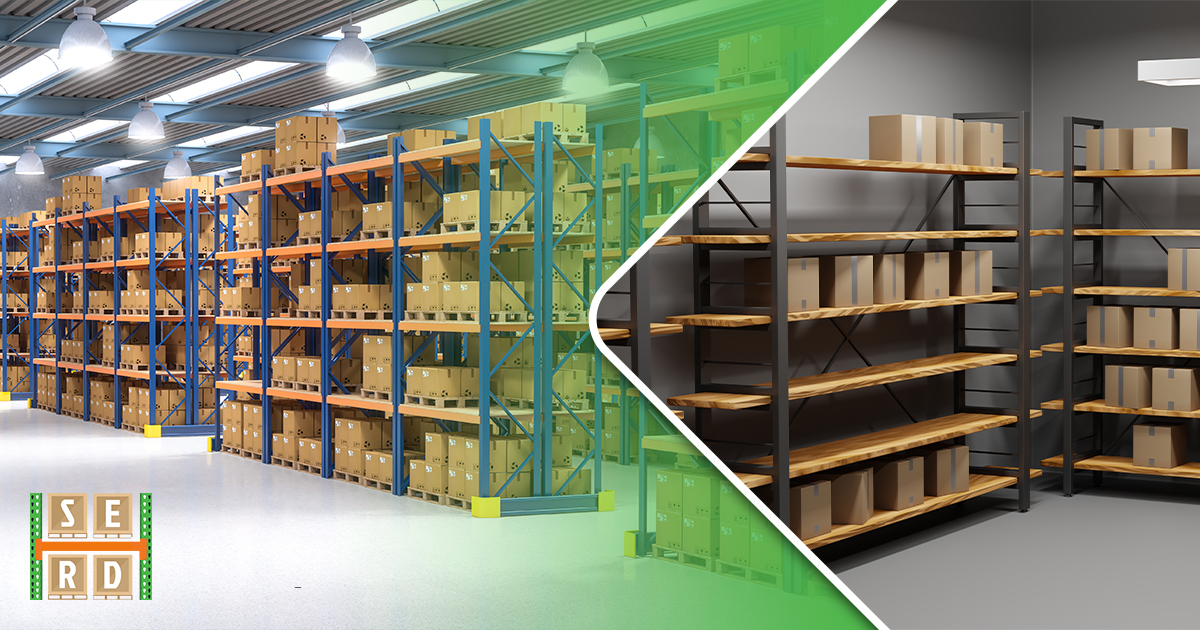
Racking Vs Shelving: What’s the difference?
Racking and shelving both are essential appliances of warehouse storage however they differ in terms of the size and weight of the products they can both hold.
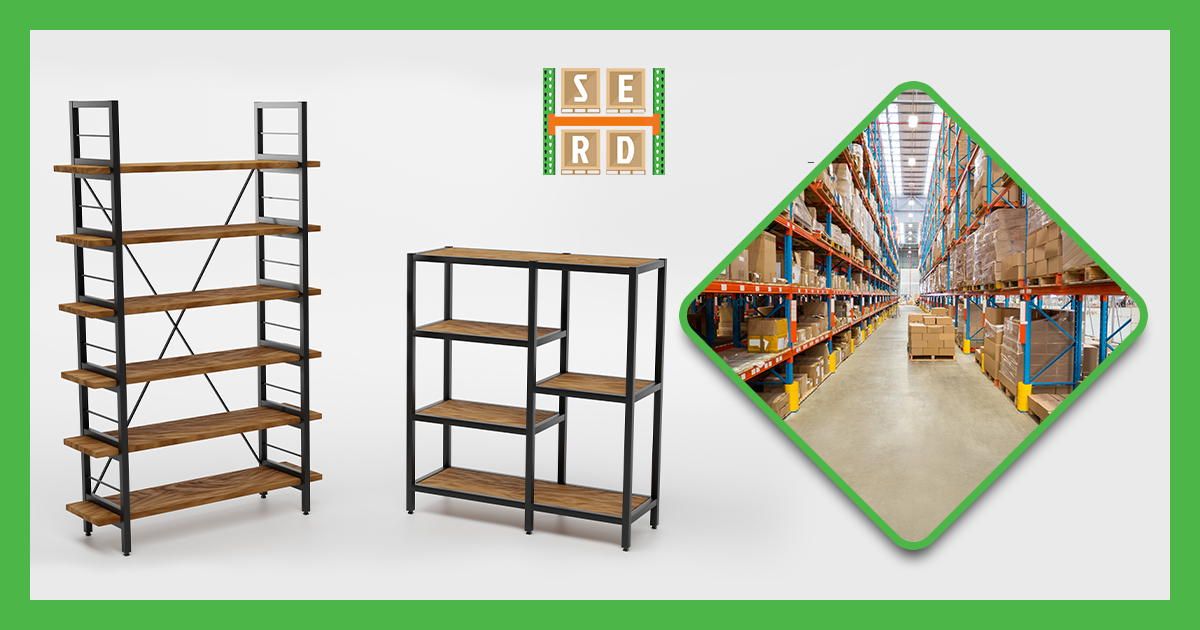
Racking
Racking is one of the crucial pieces of equipment used to store larger, heavier products that must be moved around the warehouse and processed by forklifts or other industrial machinery. Less space is needed and units are easily accessible with a racking system. As a result, the area needed to maintain a racking system is likely going to be greatly reduced. While warehouse racking is constructed in multiple bays to support heavier weight, shelving is set up in single sections. Most racking systems are anchored to the floor in order to increase stability.
Shelving
Smaller, lighter items are kept on shelving so that it can be simpler to reach for and carry by hand. In order to keep similar items together, products are frequently kept in individual storage units rather than on pallets. Metal shelving units are typically installed on the ground and are made of stainless steel material. There are also wheeled or mechanized shelving systems in some warehouse facilities. When compared to racking, warehouse shelving needs more space for the product and the machinery needed to move it around the facility. Depending on the needs of the production, these warehouse shelves can be combined.
What your product and roll-out pattern is ultimately determines how your warehouse is organized. Your output space can be increased by combining shelving and racking systems.
